
'ISRO will not manufacture any launch vehicles. That will all be done by the private sector or public sector undertakings.'

India's move to privatise PSLV rocket production through IN-SPACe has triggered debate over national security, ageing technology and the agency's role.

There is no answer to the question of how IN-SPACe invited EOIs for ISRO's mature rockets and whether it was based on any government policy decision.

'IN-SPACe like an octopus is stretching its tentacles everywhere and choking ISRO.'
'The prime minister has given us the task of taking at least 300 satellites to orbit in the next five to six years.'

Nine employee associations at ISRO have written to Chairperson V Narayanan, seeking official clarification on the proposed transfer of manufacturing and operational functions to private entities. They raised concerns about ISRO's future role, employee consequences, and recruitment, following comments by IN-SPACe chairperson Pawan Goenka regarding ISRO's eventual exit from launch vehicle manufacturing.

'It seems the prime minister may not be given the real picture about the country's space sector and ISRO. So, we are having the seminar to bring the issues to his notice.'

ISRO has issued an Announcement of Opportunity, inviting Indian scientists and researchers to submit proposals for accessing data from its XPoSat Mission. Launched in January 2024, XPoSat is India's first satellite dedicated to X-ray polarimetry measurements, designed to study extreme astronomical X-ray sources like black holes and neutron stars, thereby enhancing understanding of celestial emissions.

Astronaut Shubhanshu Shukla discusses the Gaganyaan mission and its potential to inspire other nations in space exploration, drawing on his experiences as an IAF test pilot and his time on the International Space Station.

'He didn't touch upon the core questions raised by the nine employee associations.'

Mission Embrace aims to perform the world's first in-orbit demonstration of soft robotic capture for future active debris removal missions

Buying a mature rocket technology gives companies the designs and hardware know-how, but not necessarily the decades of engineering wisdom needed to make it work.
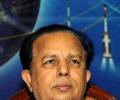
ISRO and TIFR have signed a Memorandum of Understanding to collaborate on space science, technology, and exploration, marking a significant milestone for India's space programme.

A US appeals court has upheld a $562.5 million arbitral award, which has grown to over $2 billion with interest, in favour of Devas Multimedia against Antrix Corporation, the commercial arm of ISRO, ruling that US courts have jurisdiction despite Antrix being government-owned.

JAKSON Group has appointed Ivan Saha as the Managing Director of its integrated Solar Manufacturing business. Saha, with over 31 years of experience in the semiconductor, solar, and sustainable energy sectors, will oversee technology, operations, and business growth, supporting JAKSON's expansion and backward integration plans in the solar value chain.

Weighing 190 kg, Mission Drishti is India's heaviest privately developed Earth observation satellite.

The larger question raised by the associations is simple: If ISRO is no longer to manufacture launch vehicles, what will happen to the institution's accumulated capabilities and the people who built them?
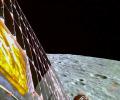
NASA has invited ISRO to join its ambitious Moon Base mission to establish a permanent lunar outpost near the Moon's South Pole, aiming for scientific discoveries and future deep space exploration. This invitation follows discussions at the Civil Space Joint Working Group meeting in Bengaluru, where both nations also advanced cooperation under the Artemis Accords and the TRUST initiative.

Their message is blunt: Public scientific wealth should not be transferred at what they describe as 'throwaway prices'.capability, recruitment, promotional avenues and the voice of its employees.

Prime Minister Narendra Modi has announced the formation of a high-powered task force, led by Infosys co-founder Nandan Nilekani, to recommend reforms for examinations conducted by the National Testing Agency (NTA). The task force aims to leverage technology for a robust and transparent examination system, following recent public agitation and the resignation of the Education Minister.

The Bharatiya Antariksh Station represents the next phase of India's human spaceflight ambitions, enabling long-duration presence in space, advanced microgravity research and technology development, and supporting future human exploration missions.

Group Captain Shukla was commissioned into the fighter stream of the Indian Air Force in June 2006.

A rocket designed and developed by ISRO is being transferred to industry for production.
Nine ISRO associations want to know whether this is simply an effort to expand India's industrial capacity or part of a larger policy under which ISRO itself will eventually withdraw from rocket manufacturing.

The task force's move to directly solicit views from students, parents and teachers marks a parallel effort to bring education stakeholders into the reform process.

The Department of Space has directed that requests for voluntary retirement or resignation from Group 'A' Scientific and Technical personnel associated with the prestigious Gaganyaan human spaceflight programme and other important missions should not be accepted as a matter of routine.

'It is to observe the Sun continuously that you have the Aditya L1 mission.' 'It is in a position from where it can observe the Sun continuously.'

It is about proving that the agency can still deliver when the stakes are high.

'With Vikram-1, we take our biggest step yet towards a reliable, high-cadence launch programme built in India, for India and the world.'

'It is not economical to operate GSLV-Mk II due to its cost and complexity. Future launches to be managed with LVM3.'

These upcoming launches carry added significance in light of setbacks suffered in recent years.

While recovery efforts are ongoing, the likelihood of recovery currently appears low.
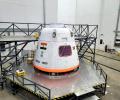
Modi gave these directions during a meeting to review the preparedness of the Gaganyaan mission and the first demonstration flight of the crew escape system test vehicle scheduled for October 21.

'I don't think the government will sacrifice such a fine institution for monetary gains.'

India's Ambassador to the US, Vinay Mohan Kwatra, has clarified that the recent amendments to the Foreign Contribution (Regulation) Act (FCRA) are primarily aimed at enhancing transparency and ensuring accountability in foreign financial flows.
The Central Industrial Security Force (CISF) has signed an MoU with the Drone Federation of India (DFI) to enhance its counter-drone capabilities. This partnership aims to strengthen security at vital installations like airports, nuclear facilities, and oil refineries by fostering engagement with Indian drone startups and technology companies for capacity building, research, and operational readiness against aerial threats.

Based on the broadcast visuals, a rocket expert said the failure appeared similar to the anomaly seen during the PSLV-C61 mission.

Union Finance Minister Nirmala Sitharaman expressed strong confidence in India achieving over 10 per cent economic growth, advocating for increased technology adoption and innovation. She urged overcoming scepticism and highlighted technology's transformative role in agriculture and public sector reforms, while also launching a new fund and book at an IIT Madras event.

The appointment comes as Agnikul prepares for Mission 02, a flight that will attempt, for the first time on Indian soil, the recovery of an orbital-class rocket booster and the extension of a rocket's upper stage into an on-orbit platform.

Param Foundation inaugurates 'ParSEC Whitefield', a 30,000 sq ft experiential science and innovation centre in Bengaluru, designed to engage visitors through interactive exhibits, innovation workshops and public programmes.
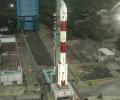
The test conducted on Saturday in collaboration with Thrust Tech India Limited saw the rocket ascend 1.1 km at 5:14:33 PM, a complete success.
